
The school-year reset can feel like trying to pack a whole summer into one backpack. Back to school brings forms, shopping choices, and routine changes, all at once. That can make even a confident student feel a little wobbly.
We can make the season easier by breaking it into small steps, not one giant task. This checklist helps families, school-age students, and college students plan timing, priorities, supplies, routines, and one final check. You do not need to do everything today. Pick one small task to handle today, and the rest can follow one step at a time.
Key Takeaways
- Start with the school calendar and set reminders backward from the first day.
- Choose a spending limit before looking for deals.
- Buy the school-list essentials first, then add extras if the budget allows.
- Make the morning routine familiar with a simple dry run.
- Check school-specific directions before the student heads out.
When Does Back to School Start in 2026?
In 2026, a student could start school as early as July 15 in Chandler or as late as September 10 in New York City. Your school calendar sets the date that matters to your family. Starting with the right date makes each later choice easier.
Your school calendar sets the date that matters to your family.
There is no single national first day of school in the United States. District dates differ, even within the same state, so a broad seasonal estimate can mislead.
First days vary by district
Chandler Unified set a July 15 start, while Houston ISD set August 10. Seattle Public Schools set September 2 for grades 1-12, and New York City Public Schools set September 10.
Those are district examples, not statewide dates. Seattle also set September 8 for preschool and kindergarten, so students in one family may not share a start date.
The Seattle calendar lists September 7, 2026, as Labor Day, with no school. Winter break runs December 21, 2026, through January 1, 2027.
Seattle’s spring break is April 12-16, 2027, and its last day is June 21, with a one-hour early dismissal. Those dates show why the school calendar helps beyond the first morning.
Build your own date map
Backward planning means starting with the first day of school and scheduling each preparation task before it. We can use it to place reminders for forms, shopping, and routine changes.
For example, put form deadlines ahead of the first day, then leave time for supply shopping and a dry run. Keep grade-specific dates beside the main school start date.
Check the school’s own calendar for a student’s grade, campus, and special schedule. Put the first day and any grade-specific start date in your calendar before setting the rest of your deadlines.
Set a Back-to-School Budget Before You Shop
A budget works best when it has a job for every dollar, not when it tries to predict every possible sale. Set a spending cap first, then sort essentials from upgrades. That keeps school costs from turning into a string of checkout surprises.
Families with K-12 students planned average back-to-school spending of $863.86 in 2026, up from $858.07 in 2025. These are planned averages, not a required target for your household.
| Shopper group and category | Planned average | Year |
|---|---|---|
| K-12 school supplies | $146.45 | 2026 |
| K-12 shoes | $174.01 | 2026 |
| K-12 clothing and accessories | $250.29 | 2026 |
| K-12 electronics | $293.11 | 2026 |
| College electronics | $341.95 | 2026 |
Plan for K-12 costs
K-12 planned spending totaled $43.3 billion in 2026, compared with $39.4 billion in 2025. The numbers cover many families, but your own student may need far less.
Make a short list of required items, then give each category a limit. Keep a little of the budget aside for later replenishment, such as pencils or paper that run out.
Back-to-school deals and back-to-school offers help most when they lower the price of something already on your list. Compare discounts after setting your list and budget, not before.
Make room for college expenses
College students and families were expected to spend $103.5 billion in 2026, with planned average spending of $1,437.79 per shopper. That figure can include more than classroom supplies.
College shoppers planned average spending of $341.95 for electronics and $194.00 for dorm or apartment furnishings. A student who already owns useful items may need a smaller budget.
Separate essentials from upgrades, then save receipts for purchases that may need to be returned. Before buying an upgrade, check whether it fits the budget after the essentials are covered.
Make a Shopping Plan That Beats Last-Minute Stress
You do not need to buy the whole year’s worth of supplies in one checkout. Start with what the student needs for the first day, then replenish later. That approach can ease both crowded shopping trips and budget pressure.
By early July 2026, 62% of U.S. shoppers had started back-to-school shopping. In the same survey, 47% planned to buy only start-of-school essentials and add items later.
Some shoppers were waiting for better deals, while others were spreading out budgets. Among shoppers who had not bought at least half their items, 46% were waiting for the best deals and 23% were spreading out spending.
Major June sales events, including Prime Day, Walmart Deals, and Target Circle Deal Days, drew 54% of shoppers for school-related purchases. A sale helps only when the item fits the plan.
Buy the true essentials first
Use this quick list before opening shopping apps or heading to a store:
- Download the school supply list.
- Check what is already at home.
- Separate first-day necessities from later buys.
- Save receipts and note return details.
Store-brand paper goods can work well for basic needs. Keep any special classroom requests on the list, even if a lower-cost option looks similar.
Choose where to shop by what you need
K-12 shoppers planned to use online stores, department stores, and discount stores in 2026. Pick the channel that suits the item, not just the nearest checkout.
| Shopping channel | K-12 shoppers planning to use it | Practical use |
|---|---|---|
| Online | 50% | Compare listed items |
| Department stores | 47% | Check fit and feel |
| Discount stores | 44% | Compare basic supplies |
Online shopping makes it easy to compare exact items, while a store lets a student test a backpack or shoe fit. Keep the school’s list beside your budget so a tempting deal does not turn into an unplanned purchase.
Build a Useful School Supply Kit
A sturdy notebook and a reliable pencil can do more for a student than a drawer full of novelty gadgets. Use the school’s list as the final word on classroom supplies. General suggestions should never crowd out a teacher’s specific request.
A five-item starter kit gives most students a simple place to begin. Add only what the school or the student’s work calls for.
- Notebooks or paper
- Folders
- Pencils
- Pens
- The specific supplies on the student’s school list
Cover paper-and-pencil basics
Before buying, check drawers, desk bins, and last year’s backpack. A half-used notebook or a few sharp pencils may be ready for another school year.
For one example, an 80-pack of BIC Mechanical #2 Pencils with a medium 0.7 mm point lists at $25. Zebra Sarasa Clip Retractable Gel Pens list at $15 for a pack.
The Zebra pens have a 0.5 mm fine point and can be refilled. Refillable pens can make sense for a student who likes the same feel all year.
Add study tools that suit the student
The Five Star Spiral Notebook and Study App lists at $7. It can scan handwritten notes with a phone, then turn them into digital flashcards and other study materials.
That option connects paper notes with a phone without requiring a special digital notebook. Some students remember ideas best when they write them by hand.
By comparison, the reMarkable Paper Pure lists at $399, and the reMarkable Paper Pro lists at $679. Those higher prices do not make either device a school must-have.
Buy the format the student will actually use, whether that is paper, a phone-assisted notebook, or a digital notebook.
Choose a Backpack, Lunch Gear, and Water Bottle
Before picking a backpack, check the laptop and books the student will really carry. The right bag fits the daily load without adding empty bulk. A bag that looks roomy in a store can feel awkward when packed.
Think about the commute and the extras that travel with the student. Gym clothes, a tablet, or a water bottle can change what needs to fit.
Match the backpack to its everyday load
The Thule Enroute Backpack fits a laptop up to 15.6 inches and a tablet up to 10.5 inches. Its opaque, water-resistant TPU compartment can hold gym clothes apart from books.
The bag lists at $120 and comes in seven sizes. Those details describe one product, not a shopping rule for every student.
Measure the laptop, then consider the books and everyday extras that will share the bag. A student carrying only a few notebooks may not need a large pack.
Make lunch and hydration easy
The YETI Daytrip 3L Insulated Soft Cooler Lunch Box lists at $65 and comes in 10 colors. Its size may suit a student carrying a packed lunch and a few snacks.
The Owala FreeSip stainless-steel bottle holds 32 ounces and lists at $35. It also comes in 16-ounce kids’ and 40-ounce options, so the student can choose a size that fits their day.
The Thermos Icon Food Jar holds 16 ounces and lists at $30. It is described as keeping food hot for 10 hours or cold for 24 hours.
Choose features for the actual routine, not the most impressive product description. Test the packed bag at home, including its water bottle and lunch container, before the first commute.
Find a Kids’ Backpack That Fits the Job
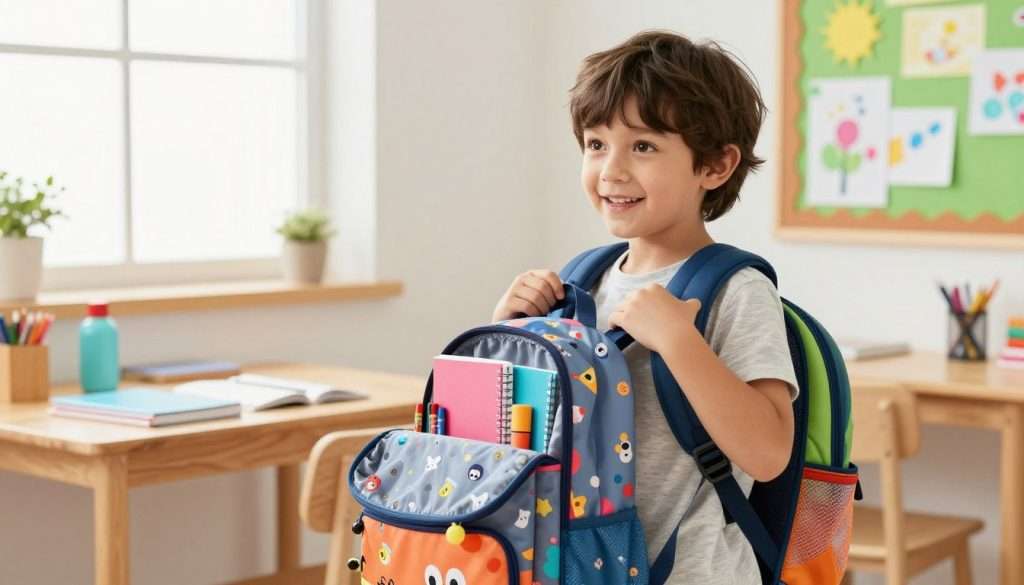
The best kids’ backpack carries the real school load without swallowing the student. Fit, comfort, and device rules matter more than choosing the biggest bag. A child should be able to manage the pack without wrestling it.
Compare the bag’s size, pocket layout, cleaning limits, and guarantee. Those small details matter after the first muddy walk or a long day of use.
Compare size and everyday features
| Backpack | Listed price | Size or useful feature |
|---|---|---|
| L.L.Bean Original Book Pack | $35.96 | 24 liters, no laptop sleeve |
| Cat & Jack | $25 | 17 inches, one-year Target guarantee |
| Wildkin | $34.99 | 15 inches, side bottle sleeve |
| Under Armour UA Hustle 6.0 | $45 | Chromebook option |
The L.L.Bean pack uses weatherproof nylon and reflective trim, but it has no laptop sleeve and is spot-clean only. Its one-year satisfaction guarantee differs from the other brands’ terms.
The Cat & Jack bag has a one-year Target guarantee. The Wildkin pack has a 90-day manufacturer warranty, plus a main compartment, front pocket, and side bottle sleeve.
Match the bag to school technology
A student who carries a school Chromebook may need a padded space that holds the device securely. The Under Armour UA Hustle 6.0 is listed as one Chromebook option.
Do not assume every student needs a laptop sleeve. Check the school’s device rules and the actual device size, then see how the bag feels when loaded.
Ask the student to try on the bag with a few books inside. Check the school’s device rules before choosing a bag based on a laptop sleeve.
Set Up a College-Ready Kit
For college, the right laptop starts with the software and assignments the student’s courses actually require. Engineering students should check software needs and the Windows-oriented guideline before choosing a computer. A strong spec sheet means little if a required program will not run well.
The 2026 guide says engineering students need at least 16 GB of RAM and 512 GB of storage for processor-heavy programs that mainly run on Windows. Course needs still come first.
Match laptop specs to the course
A Dell laptop with 32 GB of RAM, 1 TB of storage, a 16-inch touchscreen, and an 18-hour battery life lists at $1,280. Apple’s M5 Air with 16 GB of RAM and 512 GB of storage lists at $1,200.
These are examples, not a universal pick for every college student. The Dell has more listed memory and storage, while the Apple model meets the stated engineering minimum.
Ask which operating system, programs, and course tasks the student will use. A student in a writing course may have different needs from one running demanding design software.
Plan for campus carry and student services
Laptop size, book weight, and whether a backpack also goes to the gym or work can shape a college bag choice. Measure the device before shopping.
The adidas Amplifier Backpack lists at around $55, has a 16-inch laptop sleeve, and side bottle pockets for bottles up to 32 ounces. The Fjallraven Kanken Laptop compartment fits a computer up to 13 inches, with larger versions available.
Eligible college students ages 18-24 can get Amazon Prime for Young Adults with a free six-month trial, then pay $7.49 per month. That offer is not needed for every student.
Confirm course requirements and device dimensions before paying for a computer or backpack.
Ease Back Into School-Day Routines
A gentle reset during the final week is easier than asking everyone to become a morning person overnight. Move bedtime 5-10 minutes earlier each day during the week before school. Small shifts feel less like a sudden alarm-clock ambush.
Bring meal and sleep times closer to the school schedule, too. Returning to regular rhythms can make the switch feel more familiar.
Shift sleep and meal times gradually
Pick a bedtime shift the student can manage, then keep moving it earlier by 5-10 minutes each day. A big jump from a late summer bedtime can make the first mornings rough.
Use the same gentle approach for meals. Moving dinner or breakfast toward the school-day schedule can help the body expect a steadier routine.
Practice the morning before it counts
A dry run is a low-stress practice of the school-day routine. It lets the student try the small transitions before they happen on a busy morning.
- Wake at the intended time.
- Practice the route to the bus stop or school.
- Try opening a new locker, if relevant.
Young children may need extra practice with parts of the routine they have not done before. Keep the practice short, and let them repeat the tricky part.
We can make the first morning feel less new without trying to perfect every detail. Keep the last practice morning calm and realistic, so the routine feels familiar rather than like another test.
Lower First-Day Nerves and Finish Family Admin
A five-minute conversation about what feels unfamiliar can uncover the worry a packed bag cannot fix. Ask what the student feels excited or nervous about, then talk through one concern at a time. A little space to answer often helps more than a quick pep talk.
For young children, a story or pretend play can make a new setting feel easier to picture. The Kissing Hand, Daniel Goes to School, and Llama Llama Misses Mama are books families can try.
Talk through worries
Ask which part of the day feels most unfamiliar, such as the bus, a new classroom, or meeting a teacher. Keep your answer honest and simple.
A dry run can practice getting to the bus stop, finding the hallway route, or opening a locker. Rehearsing a transition gives the student a picture of what comes next.
Gather forms, labels, and school details
Use this compact family admin checklist to catch the small jobs that can sneak up:
- Finish school forms and sports physicals.
- Schedule haircuts if needed.
- Label jackets, water bottles, lunchboxes, and supplies.
- Check school-specific instructions.
Those four recurring items are easy to mix up in a classroom, gym, or lunch area. A name label helps belongings find their way home.
Put completed forms and labeled belongings in one place where the student can find them.
Make Breakfast and Lunch Easier
Mornings get lighter when breakfast is ready before the backpack is on. Prep a few options ahead, then offer food the student will actually eat. One menu does not suit every family or every school day.
Boiled eggs, yogurt, and fruit can wait in the refrigerator. Oatmeal and granola are pantry choices that take little morning setup.
Keep breakfast ready to grab
Choose two or three options the student likes, rather than planning a different breakfast for every morning. Keeping a few ready can reduce the scramble when the clock starts winning.
Some families may need to account for food needs or school rules. Check the school’s directions before packing items for a classroom or shared meal.
Build a lunch routine the student can manage
Pack what the student will eat, and keep lunch simple enough for them to open and manage. A child who struggles with a tight lid may need practice before school starts.
Preparing lunch parts ahead can save time in the morning. Keep the food container and water bottle with the packed school bag so they are easy to spot.
Set out tomorrow’s food and water bottle alongside the packed bag, then check that both are ready to go.
Choose 2026 Trends Without Buying the Whole Trend
A small personal touch can make a familiar backpack feel like it belongs to its student. Choose one fun extra after the school list is covered. Style can be part of the school year without taking over the shopping plan.
Bag charms stand out as a playful accessory for high-schoolers in 2026. Water bottles and analog items also feature in the year’s back-to-school trends.
Add one personal touch
A charm, patch, or favorite color can help a student spot a bag in a busy hallway. Let the student choose an extra that feels personal and stays within the family’s plan.
Keep useful basics ahead of novelty items. A fun accessory is easier to enjoy when the student already has what school requires.
Make room for analog study tools
Some students like paper notebooks and handwritten notes, while others prefer digital tools. The useful choice is the one that fits the student’s own study habits.
Analog items are a visible trend, but a notebook will not promise better grades by itself. It can still feel good to turn a page and see a clear place to start.
Let the student choose one fun extra after the everyday items are covered.
Do One Last Check Before the First Day
The final check is less about buying anything else and more about catching the one detail that belongs to your school. Confirm school-specific dates and directions before packing the bag. A quick review can prevent a very early surprise.
Confirm school-specific dates and directions before packing the bag.
School calendars may include details that do not apply across a whole district. Seattle elementary and K-8 conference days in November 2026 vary by school.
Seattle Public Schools also lists June 22 and 23, 2027, as possible emergency-closure makeup days. These are examples, not dates for every district.
Use this four-point check on the evening before school:
- Verify the school calendar and school-specific conference or makeup dates.
- Confirm transportation and arrival instructions.
- Pack approved supplies, lunch, and water.
- Set out clothes and place needed forms by the bag.
Make sure the student knows where the packed items are and when to leave. Check your school’s calendar once more before calling the bag packed.
Conclusion
A calmer start does not require a perfect plan, just a few decisions made before the rush. Focus first on what the student needs, then make the daily routine familiar in manageable steps.
One useful next step is building study habits that last beyond the first week. If this article resonated with you, my free book How to Become the Smartest Student in the Classroom gives you a full system: memory techniques, study routines, and strategies that actually stick. No cost, no catch.
Take one next step for a more confident school year: get your free copy at https://www.studyingmachine.com/free-books/.