
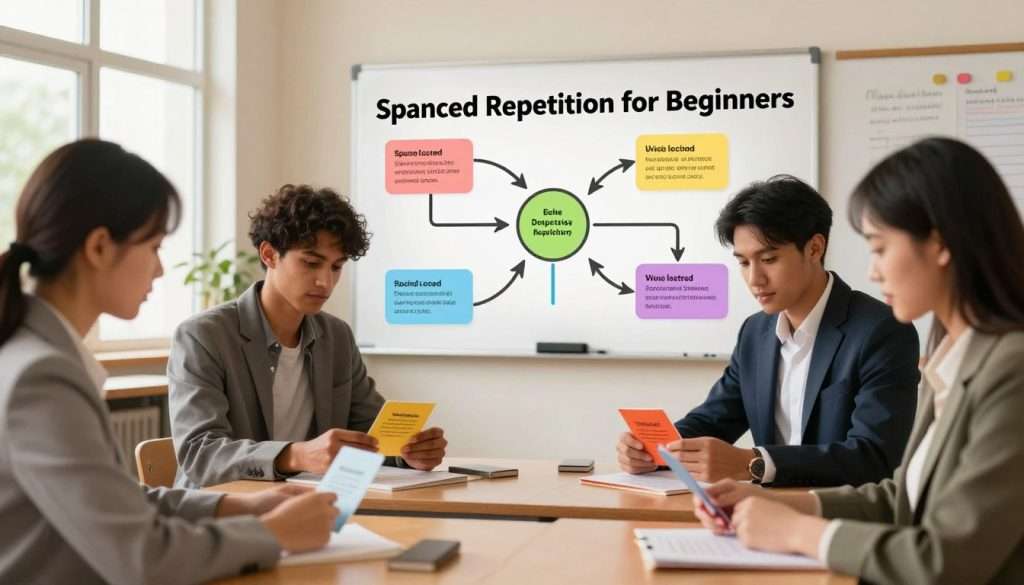
Do you ever feel like your brain is a sieve? You spend hours studying, but soon forget everything. We’ve all been there, looking at our notes and wondering why it’s all gone.
Cramming might seem like a quick fix, but it’s a trap. It makes you think you’re doing well, but forgets everything when you’re not studying. To stop forgetting everything you learn, you need a better way.
Spaced repetition for beginners is a game-changer. It spreads out your study sessions, working with your brain. It turns studying into an effective and enjoyable habit that lasts.
Key Takeaways
- Cramming provides only temporary results and leads to rapid memory loss.
- Strategic timing helps move information from short-term to long-term memory.
- Consistency beats intensity when building lasting knowledge.
- You can transform study sessions into a more relaxed, manageable process.
- Mastering these techniques saves time and reduces academic stress.
Understanding the Science of Forgetting
Our brains are made to forget, which might seem strange at first. But think about it, we get so much information every day. Our brains filter out what seems less important to save energy. By using the spaced repetition technique, you can keep the important stuff in your mind.
The Ebbinghaus Forgetting Curve Explained
In the late 19th century, Hermann Ebbinghaus found out how we lose information. Without any review, your brain forgets about 50% of new stuff within an hour. By the first day, it’s 70%, and after a week, you might remember only 10%.
This quick forgetting is called the forgetting curve. It shows that just reading a book once isn’t enough to remember it. Strategic intervention is needed to keep your memory sharp.
Why Traditional Cramming Fails
Many of us thought cramming before an exam was the best way to study. But cramming creates an illusion of competence. You might feel like you know the material, but it’s gone as soon as the test is over.
This method ignores the need for long-term memory consolidation. Using spaced repetition learning helps avoid this. It spreads out your study sessions, making your brain think the information is worth keeping.
The Cognitive Benefits of Active Recall
When you make your brain recall information, you’re doing active recall. It’s harder than just re-reading, but it’s good for your brain. The effort strengthens the neural pathways linked to that memory.
| Learning Method | Effort Level | Retention Rate |
|---|---|---|
| Passive Re-reading | Low | Very Low |
| Highlighting Text | Low | Low |
| Active Recall | High | High |
| Spaced Repetition | Medium | Excellent |
By challenging yourself, you build a stronger memory. This is the main benefit of using a spaced repetition technique for studying. It makes learning a sustainable habit, not a frantic rush.
Spaced Repetition for Beginners: How to Stop Forgetting Everything You Learn
If cramming and forgetting is a problem for you, it’s time for a change. Many students struggle because they try to learn too much at once. This beginner’s guide to spaced repetition will help you make your study sessions last.
We think learning should be fun, not stressful. With this method, you can stop forgetting everything you learn and build a strong memory.
Defining the Spaced Repetition Method
This technique is all about timing your reviews right. Instead of reviewing every day, you wait longer as you get better. This is the heart of a good spaced repetition system.
It’s like watering a plant. You don’t dump a lot of water on it once a month. You give it small amounts regularly to help it grow. This keeps your brain engaged without feeling too much.
How the Spaced Repetition System Works in Practice
The key is in the timing of your reviews. A good rule is to set your next review interval at 10–20% of the time you want to remember the info. For example, if you want to remember something for a month, review it every few days.
This simple rule makes planning your study sessions easy. You don’t have to worry if you’re studying enough or too much. By following this rhythm, you keep your knowledge fresh and ready when you need it.
| Feature | Cramming | Spaced Repetition |
|---|---|---|
| Study Schedule | All at once | Distributed over time |
| Memory Retention | Short-term only | Long-term mastery |
| Stress Levels | High and anxious | Low and consistent |
The Psychological Impact of Distributed Practice
Spreading out your practice lets your brain solidify memories. This feels more natural and less stressful. You’ll notice your confidence growing as you retain more information.
Consistency is key here. By showing up for focused sessions, you change how you learn. You’re not just memorizing; you’re mastering the material in a lasting way.
Preparing Your Study Materials for Success
Getting your study materials ready is key to mastering the spaced repetition method for beginners. Organizing your notes makes a big difference. It turns stress into manageable wins. Preparation is truly the key to long-term retention.
Breaking Down Complex Information into Atomic Facts
Your brain can’t handle big, dense paragraphs all at once. Breaking down complex info into atomic facts helps. It makes learning easier, like eating small snacks instead of a huge meal.
Focus on one concept per card. Too much info on one card makes it hard to remember. Keep it simple and keep it focused.
Writing Effective Flashcards
Writing great cards is an art that pays off. You want questions that trigger quick, confident answers. This makes learning faster and easier.
The Importance of Simplicity
Always aim for the shortest question that still makes sense. Long cards slow you down. Clarity is your best friend when making your deck.
Using Images and Contextual Clues
Our brains remember visuals better than text. Adding images or hints helps information stick. A well-placed picture can save you minutes of frustration.
| Feature | Poor Card Design | Effective Card Design |
|---|---|---|
| Content Size | Entire paragraphs | Single atomic facts |
| Visuals | None | Relevant images/diagrams |
| Complexity | Multiple questions | One clear, direct question |
| Outcome | High frustration | High retention |
By following these steps, your journey with the spaced repetition method for beginners will be smooth and effective. You’re now ready to make your study sessions powerful tools for lifelong learning.
Choosing the Right Spaced Repetition Software
Finding the right app can make studying easier. The right spaced repetition software takes the guesswork out of when to review your notes. It lets you focus on learning without worrying about scheduling.
Anki: The Gold Standard for Power Users
Anki is perfect for those who love tweaking settings. It’s the top choice for those who want full control over their study routine. You can customize how cards appear over time with its advanced algorithms.
Its interface might seem simple, but it’s incredibly powerful. It’s ideal for medical students and language learners who need to memorize lots of information. This spaced repetition software ensures you only review what you need to.
Quizlet: User-Friendly Alternatives for Students
Quizlet is great for those who want something easy to use. It has a clean design that’s easy to navigate. Creating flashcards is quick and simple.
You can share decks with friends or find millions of pre-made ones. It’s perfect for starting with active recall without getting lost in settings. Its simplicity is its biggest advantage.
Brainscape: Optimizing Confidence-Based Repetition
Brainscape focuses on your confidence levels. You rate how well you knew the answer after flipping a card. This spaced repetition software then decides when to show you that card again based on your feedback.
This method helps you focus on what challenges you. It’s an efficient way to build long-term memory while keeping study sessions interesting.
| Feature | Anki | Quizlet | Brainscape |
|---|---|---|---|
| Best For | Power Users | Casual Students | Confidence Tracking |
| Customization | Very High | Low | Medium |
| Ease of Use | Moderate | Very High | High |
| Pricing | Free (Desktop) | Freemium | Freemium |
Step-by-Step Guide to Building Your First Deck
Let’s get started on making your first set of study cards. Building a deck might seem daunting, but it’s incredibly rewarding. Creating your own materials kickstarts your learning journey.
Using a spaced repetition system turns data into lasting knowledge. It ensures your study time is focused on what matters most. This method is perfect for beginners to master the spaced repetition method easily.
Step One: Identifying Your Learning Objectives
Before you start, think about what you want to achieve. Ask yourself what you need to know soon. Keeping your goals in mind helps your deck stay focused.
Don’t try to memorize everything. Instead, focus on the key concepts. This makes your study sessions more effective.
Step Two: Creating Your Initial Card Set
Now, turn your goals into atomic facts. An atomic fact is a simple piece of information. If a card is too long, it’s hard to remember quickly.
Keep your questions brief and answers even shorter. This spaced repetition method for beginners works best with quick, rhythmic card flips. If you’re reading a lot on a card, it’s too long.
Step Three: Organizing Decks by Subject Matter
Organizing your cards is key to success. Create separate decks for different subjects. This keeps your mind focused and prevents confusion.
| Organization Strategy | Best For | Primary Benefit |
|---|---|---|
| Subject-Based | School Courses | Clear boundaries |
| Topic-Based | Complex Projects | Deep focus |
| Difficulty-Based | Rapid Review | Efficiency |
You can always adjust your decks as needed. The goal is to make a system that’s easy to use. Once your decks are organized, you’re ready to improve your memory.
Establishing an Effective Spaced Repetition Schedule
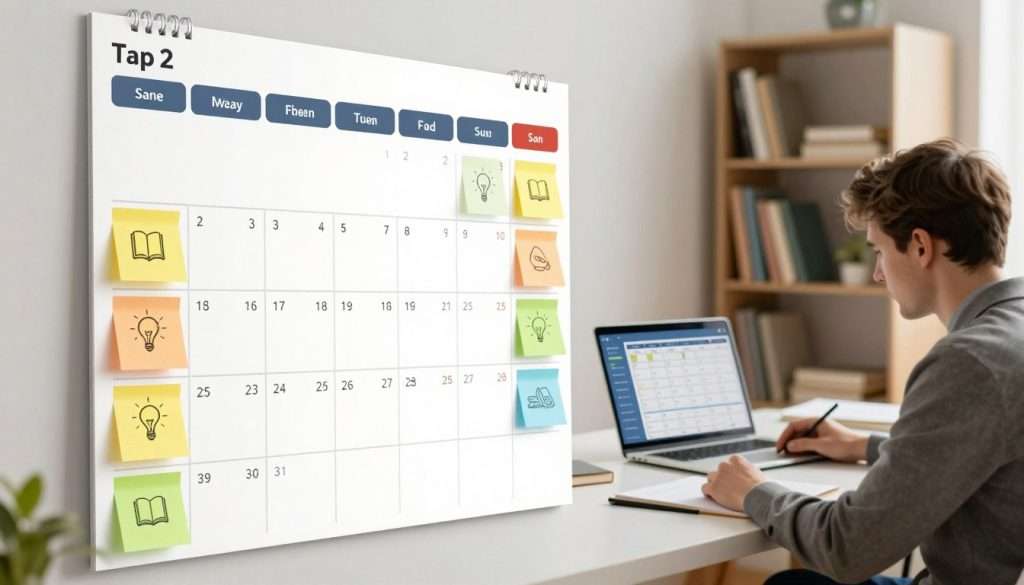
Finding the right rhythm for your reviews makes all the difference in your progress. When you commit to a spaced repetition schedule, studying becomes a manageable habit. Consistency keeps information fresh in your mind without endless hours of cramming.
Determining Your Initial Review Intervals
You don’t have to guess when to review your cards. A standard approach helps lock in new knowledge effectively. Start by reviewing new material after 1 day, then again in 3 to 5 days, followed by 1 to 2 weeks, and 1 month later.
This gradual expansion of time challenges you just enough to trigger memory consolidation. By following this pattern, you move facts from short-term to long-term memory. The table below outlines a typical path for your cards.
| Review Stage | Time Interval | Goal |
|---|---|---|
| First Review | 1 Day | Reinforce initial learning |
| Second Review | 3–5 Days | Strengthen neural pathways |
| Third Review | 1–2 Weeks | Test long-term recall |
| Fourth Review | 1 Month | Solidify permanent retention |
Managing Your Daily Review Load
Feeling overwhelmed if your queue grows too large is common. To keep your spaced repetition schedule sustainable, limit new cards each day. Focus on quality over quantity to avoid burnout.
If reviews take more than thirty minutes, pause new card creation. Aim for steady progress, not a race to the finish line.
Handling Missed Sessions and Backlogs
Life happens, and sometimes you might miss a day or two. Don’t panic if your cards pile up! The most important thing is to jump back in without clearing the entire backlog at once.
Focus on today’s reviews first to maintain momentum. Chip away at missed cards slowly, adding a few extra cards to each session until caught up. Keeping your spaced repetition schedule flexible helps you stay consistent even when busy.
Advanced Techniques to Improve Memory Retention with Spaced Repetition
You’ve got a good start, but let’s take it up a notch. Now, you can use smart tricks to make learning stick. These methods make your brain work harder, helping you improve memory retention with spaced repetition.
Using Mnemonics to Enhance Encoding
Mnemonics are like mental hooks that help you remember new facts. By turning dull data into fun stories or images, your brain stores it better. This creative encoding boosts your learning, making it a great addition to spaced repetition.
“Memory is the residue of thought.”
Studies back this up, showing how spacing out reviews helps. The Bahrick family study found that reviews 56 days apart led to better retention than closer intervals. Adding strong mnemonic anchors makes your recall almost perfect.
The Role of Interleaving in Skill Acquisition
Most people study one thing for too long. Instead, try interleaving, mixing different subjects in one session. This keeps your brain active, strengthening your neural connections.
It’s like cross-training for your mind. Switching between topics helps you understand them better. This is a great way to improve memory retention with spaced repetition because it keeps your brain alert.
Applying Spaced Repetition to Language Learning
Language learning is a perfect test for these advanced methods. With thousands of words and grammar rules to remember, a structured approach is key. A consistent spaced repetition technique helps you learn a new language without burnout.
| Technique | Primary Benefit | Best For |
|---|---|---|
| Mnemonics | Faster Encoding | Vocabulary |
| Interleaving | Deep Understanding | Grammar Rules |
| Spaced Intervals | Long-term Recall | Fluency Practice |
Breaking your language learning into smaller chunks keeps you motivated. The goal is to make learning a natural part of your day. With these advanced tools, you’re on your way to becoming a master learner.
Common Pitfalls and How to Avoid Them
We’ve all felt like we’re studying hard but not seeing results. Even the most dedicated learners can hit a wall. Using spaced repetition software can help, but it needs strategy.

Overloading Your Daily Review Queue
It’s tempting to add every fact into your deck. But adding hundreds of cards at once leads to burnout. A huge daily queue can make you feel overwhelmed and lose motivation.
Limit your new card additions to a few each day. This keeps your review sessions short and focused. Remember, being consistent is more important than being intense.
Creating Cards That Are Too Vague
Creating vague or unclear cards is a big trap. If a card is too broad, you might think you know the answer just by seeing it. This is confusing familiarity with actual learning.
“The difference between knowing the name of something and knowing something is profound.”
To avoid this, make your cards specific. Instead of asking “What is photosynthesis?”, break it down into smaller facts. This helps your brain truly recall information, not just recognize it.
Neglecting Consistent Daily Practice
The magic of this method is in its rhythm. Skipping days means your cards will pile up, losing the timing benefits. Even a short session is better than skipping it.
| Habit Type | Ineffective Approach | Effective Strategy |
|---|---|---|
| Card Creation | Vague, long paragraphs | Atomic, specific facts |
| Review Volume | Adding 100+ cards daily | Adding 10-20 cards daily |
| Consistency | Cramming once a week | Daily, short sessions |
Building a habit is key to success. Treat your study time as a non-negotiable appointment. Showing up every day will amaze you at how much you can retain.
Integrating Spaced Repetition into Your Daily Routine
Building a brain that remembers everything doesn’t need a huge change in your life. You don’t have to spend hours in a library to improve your spaced repetition learning. Instead, just add these habits to the small gaps in your day.
Finding Time for Micro-Learning Sessions
Many think studying must be a long, hard task. But, micro-learning sessions of 10 to 15 minutes are much better. They keep your brain sharp and prevent burnout.
By focusing on small chunks, you stay focused better. Your memory improves when you don’t see studying as a heavy task. It’s about working with your brain, not against it.
Leveraging Downtime for Reviews
Think about all the wasted moments in your day. Waiting for coffee, on the bus, or in line are great times to follow your spaced repetition schedule. Using a mobile app during these times turns idle moments into learning opportunities.
“We are what we repeatedly do. Excellence, then, is not an act, but a habit.”
You can quickly do a few flashcards while waiting for a meeting. This keeps your knowledge sharp without taking up too much time.
Building Long-Term Habits for Lifelong Learning
Consistency is key for any learning strategy. Making these small reviews a regular part of your routine makes them automatic. You’re not just memorizing; you’re building a sustainable lifestyle for lifelong learning.
- Start with just one 10-minute session per day.
- Use your phone to review cards during your commute.
- Celebrate small wins to keep your motivation high.
The goal is to make learning a natural part of your day. Stay flexible and patient, and you’ll master retention. Keep showing up, and your future self will thank you.
Conclusion
You now have the tools to unlock your brain’s full potential. This guide is your roadmap to making knowledge stick.
Learning is a long-term journey, not a quick race. You don’t have to learn everything at once. Start with small, daily steps to improve your memory.
Your brain grows stronger when you try to remember things. Each time you recall a fact, you make your brain’s pathways stronger. This is how your brain naturally stores information.
Keep up with your review schedule. Even when it’s hard, trust the process. You’re building a strong foundation for learning that will help you in many areas of life.
What topic will you start with? Choose something you’re interested in, make your first deck, and begin today. We’re excited to see your progress as you work with your brain.